Streaming Music
This guide will show you how to stream multi-room synchronized music to one or many Sat1 devices around your home using Music-Assistant.io. You can stream from Spotify, Apple Music, Tidal etc. And your Sat1 speaker can operate as a Spotify Connect speaker or Airplay speaker so you can stream music directly from your phone.
Install Music Assistant
There are many ways to install Music Assistant in your home. Read their documentation to get started.
Add a Music Provider
Add a music source provider like Spotify, Apple Music, YouTube Music, or many other sources by following the instructions below.
Connect a Music Provider to MA
Connect Your Sat1 to Music Assistant
Sendspin Streaming
The latest firmware uses Sendspin (Nabu Casa's streaming protocol) for music playback. In our testing, Sendspin delivers better performance with improved synchronization and lower latency.
Sendspin works out of the box with Music Assistant — no additional provider setup, port configuration, or server installation is required. Your Sat1 speakers will automatically appear as available players in Music Assistant once connected.
Upgrading from v0.1.x Snapcast firmware?
If your Sat1 was previously connected to Music Assistant via Snapcast please follow these steps before booting your new Sat:
- ! BACKUP ! your Music Assistant !
- Update Sat1 to latest Sendspin firmware
- Delete Sat1 Snapcast Speakers from MA -> Settings -> Players (use the 3 dots menu)
- Restart Music Assistant (possibly restart Sat1 if necessary)
Sendspin supports the same flexible configurations as before:
- Single Speaker – Stream audio to one Satellite1 speaker.
- Stereo Pair – Connect two Satellite1 speakers as a left/right stereo pair.
- Multi-Room Audio – Sync two or more Satellite1 speakers for synchronized playback across multiple rooms (similar to Sonos).
Adjust DSP/Speaker Settings to Achieve Best Sound
Using Music Assistant's DSP equalizer can significantly improve the sound quality of your Sat1.
-
Open Speaker Settings
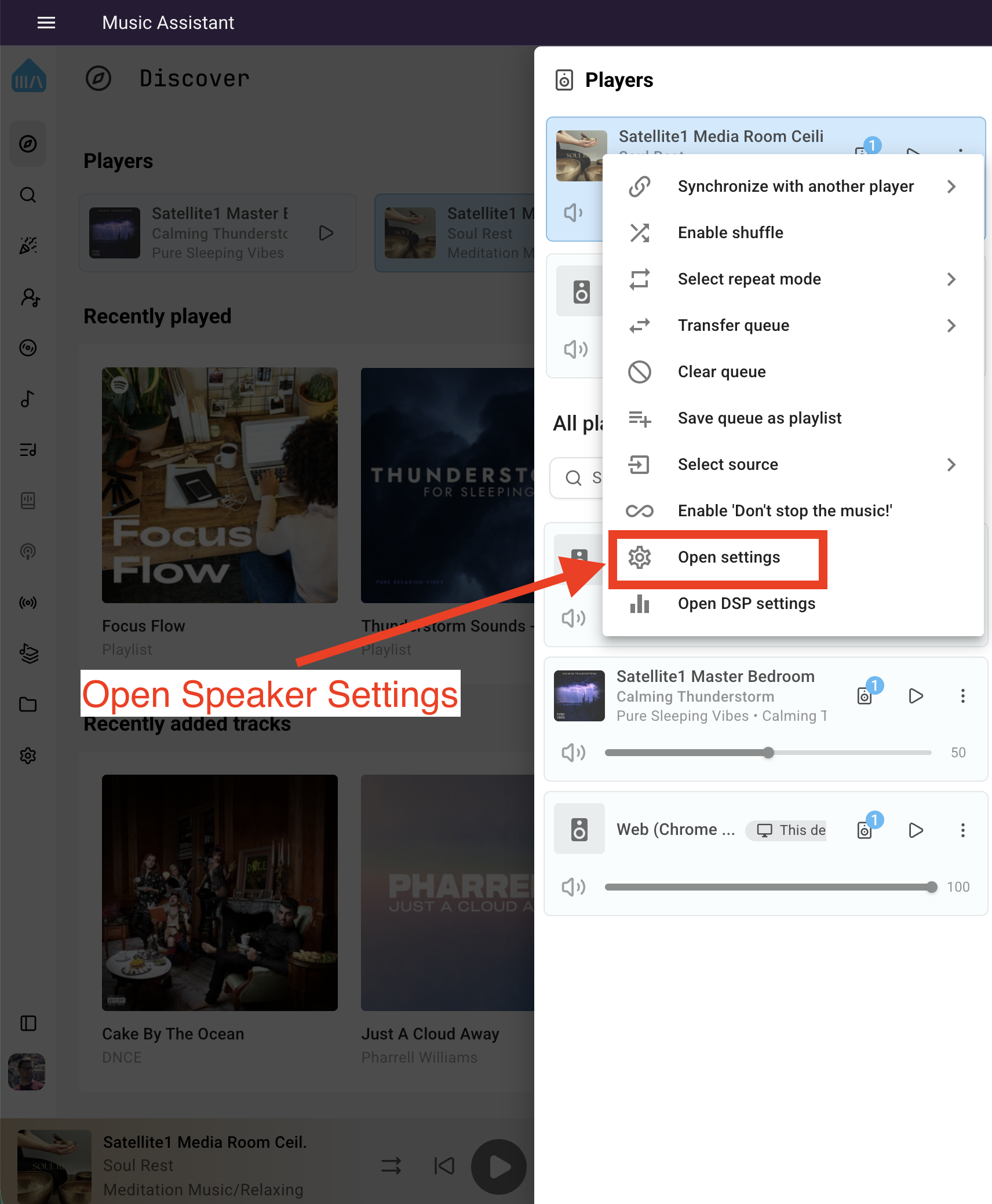
Go to MA " icon" and select "Open Settings". -
Disable Volume Normalization
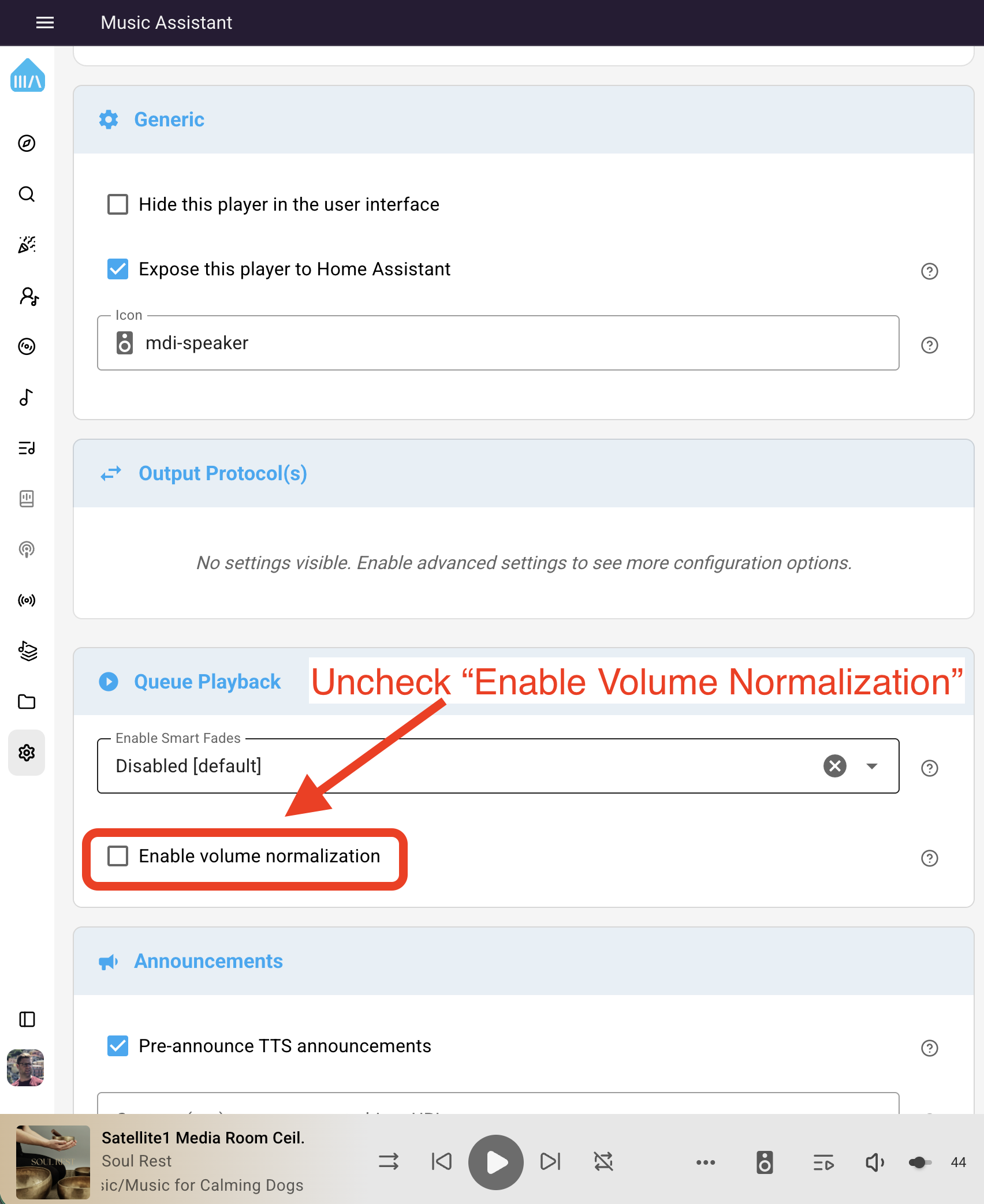
Disable "Volume Normalization" and be sure to click "Save" at the bottom of the page. -
Open DSP Settings
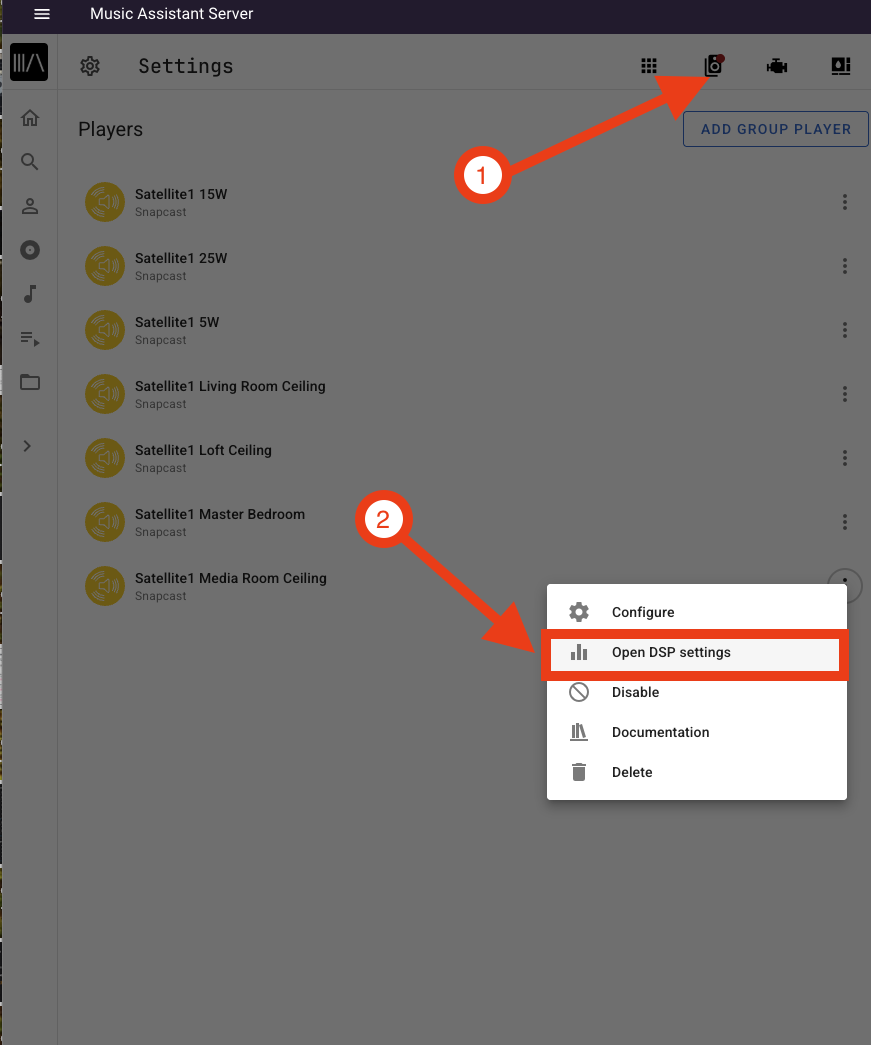
Then go to " icon" and select "Open DSP Settings". -
Adjust DSP
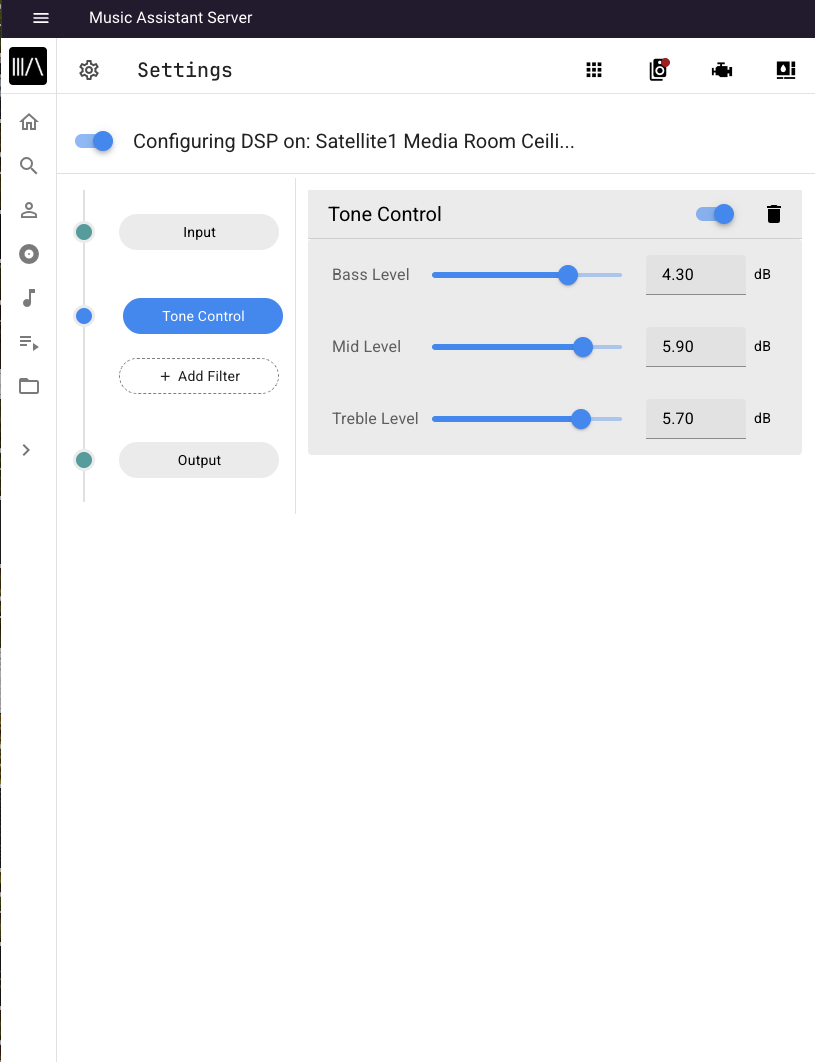
Adjust the DSP settings to your liking, or if you have our Sat1.1 Smart Speaker we highly recommend downloading and importing our parametric EQ preset using the "Import APO/REW Preset" button.Read about DSP
Controlling Speaker Groups
Dynamically add/remove Sat1 speakers to a group for synchronized multi-room music playback.
-
Play Music on Main Speaker
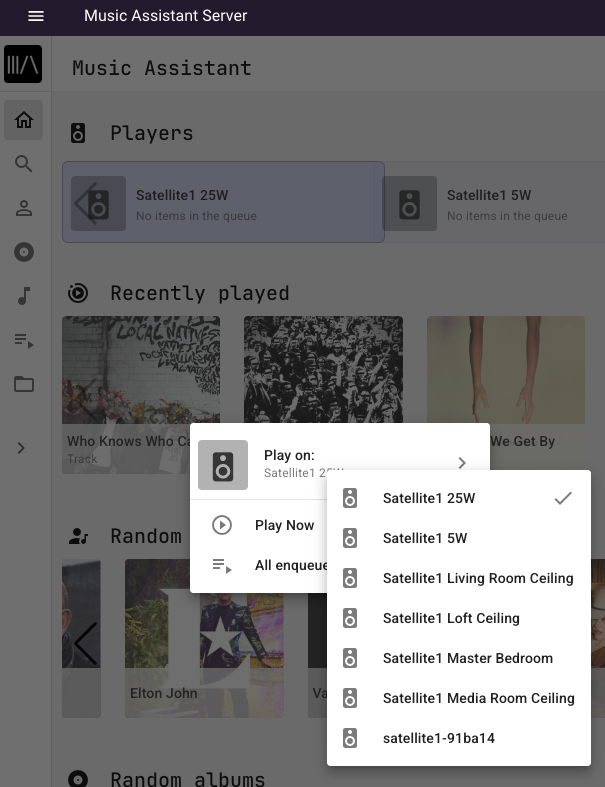
Click a track, choose "Play On", select your main speaker, then click the track again and choose "Play Now". -
Show All Speakers
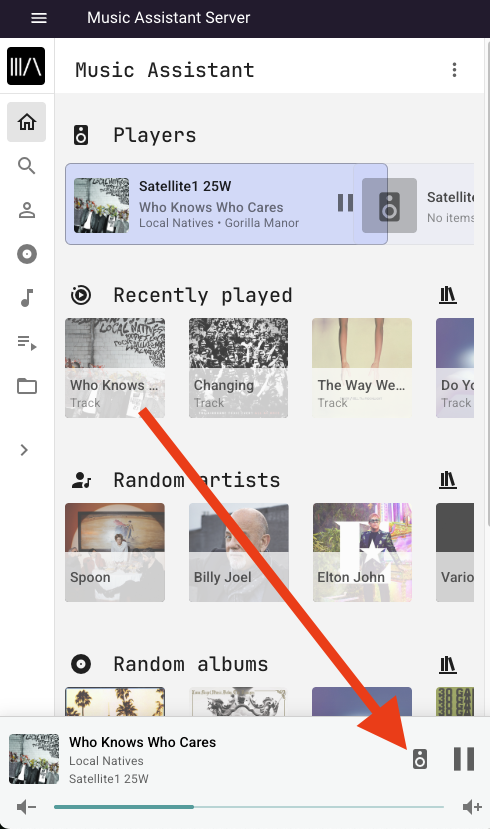 Open the Now Playing side panel by clicking the icon.
 -
Manage Speaker Group
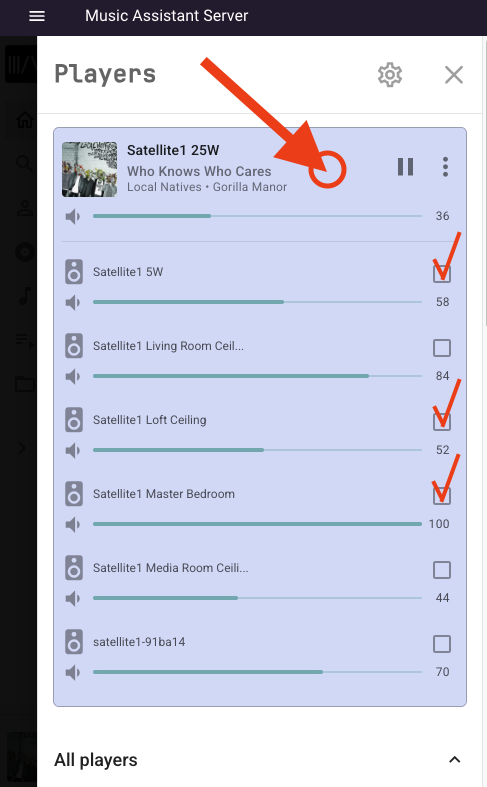
Click in the blank area next to the song tile to expand and view all speakers. Select or deselect speakers to add or remove them from the group.Sat1 Drifting Out of Sync or Stuttering?
- Inspect Sat1 ESPHome Device settings to make sure it has a strong WiFi connection
- Turn off Music Assistant DSP Equalizer
- Avoid running Music Assistant inside a virtual machine
Setup Stereo Playback & Static Grouping
This feature lets you semi-permanently group Sat1 speakers, such as combining all your upstairs speakers into one group or pairing two Sat1 speakers for stereo sound.
-
Create a Group Player
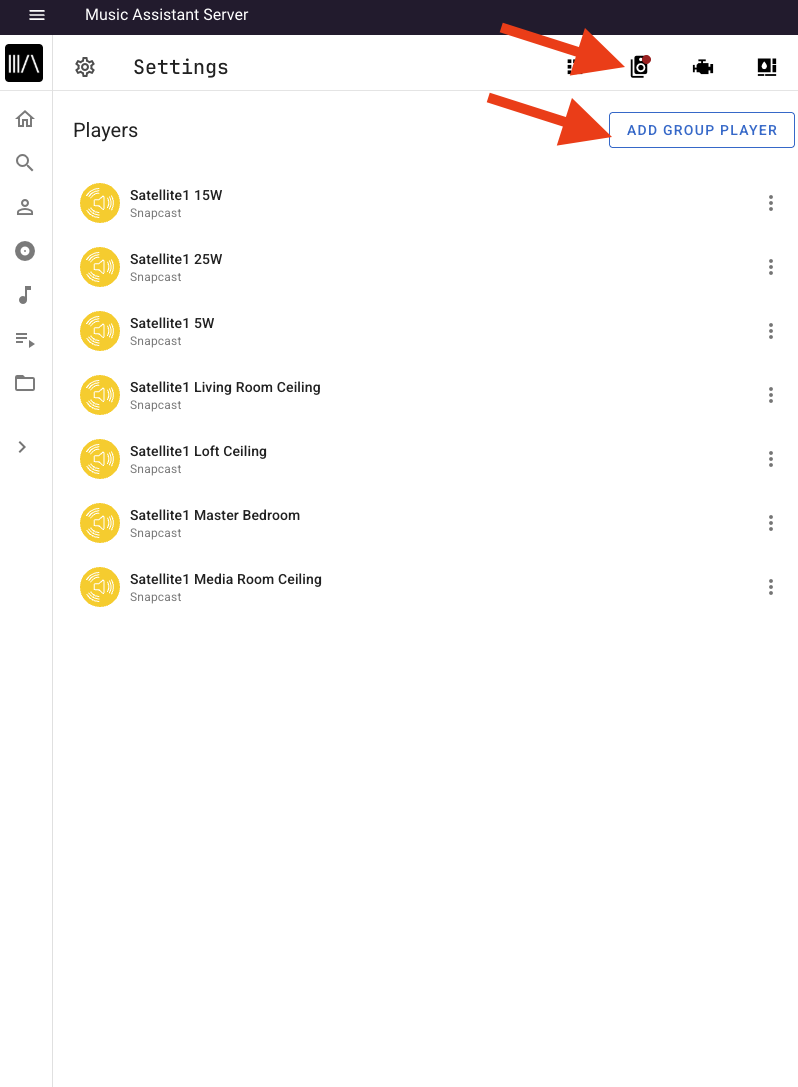
Go to MA "Settings -> Players" and select "Add Group Player". -
Name the Stereo Pair Group
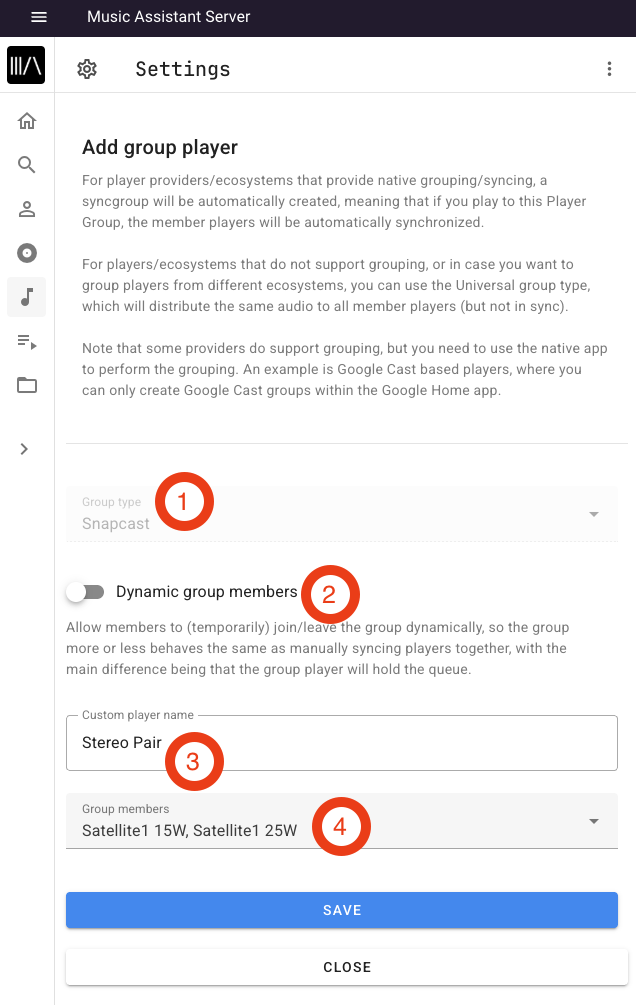
Give the group a name and add the two Sat1 speakers you want in the stereo pair. -
Set Channel Output
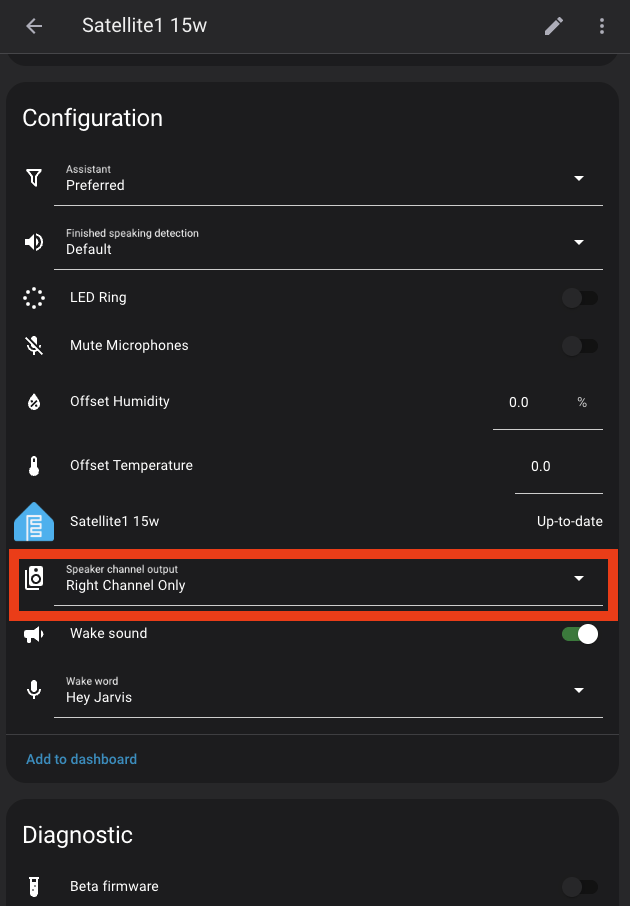
In Home Assistant, navigate to "Settings -> Devices & Services -> ESPHome" and set the correct "Speaker Channel Output" for each speaker.Tips:
- Channel selection only relates to the built-in speaker and not audio coming out of the headphone jack.
Controlling Music with Your Voice
Voice control limitations
These capabilities are still rough around the edges. Please be patient. :)
Not only do we want to say, "Hey Jarvis, turn down the volume" or "Hey Jarvis, play the next song", but we also want to say, "Hey Jarvis, play the Beatles," and have it play on that speaker (or at least ask which speaker to use). Currently, this is hard to do, but not impossible.
To achieve all this, I highly recommend reading Music Assistant's Voice Support Repository. However, I have personally found these implementations to be cumbersome and unreliable and instead have been using a different solution I'll share here (although it does currently require cloud AI).
-
Cloud AI Conversation Agent
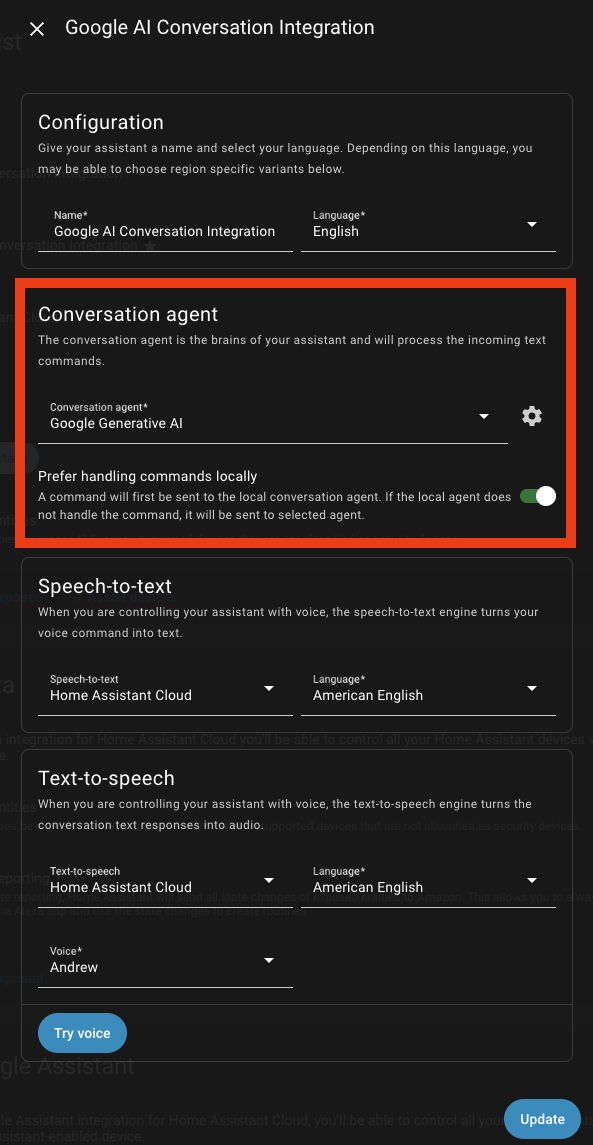
Use a voice pipeline with a Cloud AI conversation agent. Tick on "Prefer handling commands locally" to get the best results. -
Edit Speaker Device
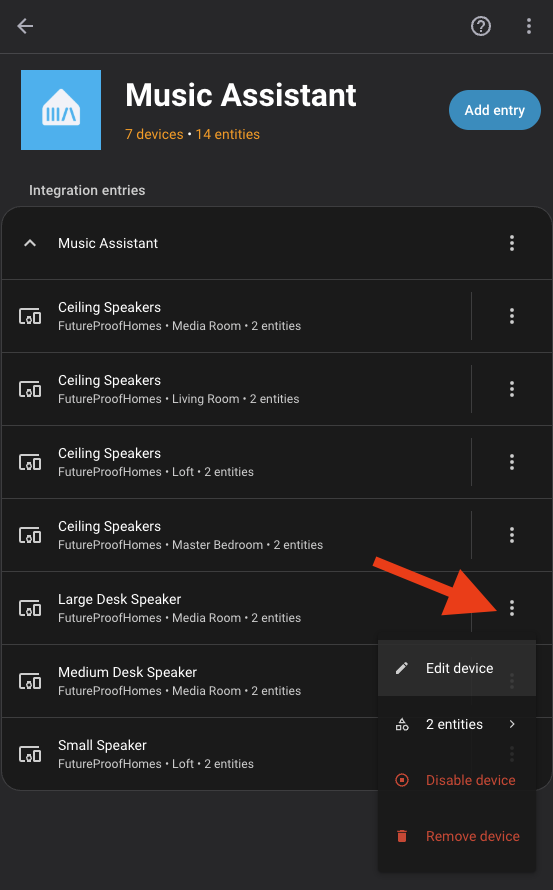
In Home Assistant, navigate to "Settings -> Devices & Services -> Music Assistant" and open the context menu to "Edit Device" for each speaker. -
Good Naming Conventions
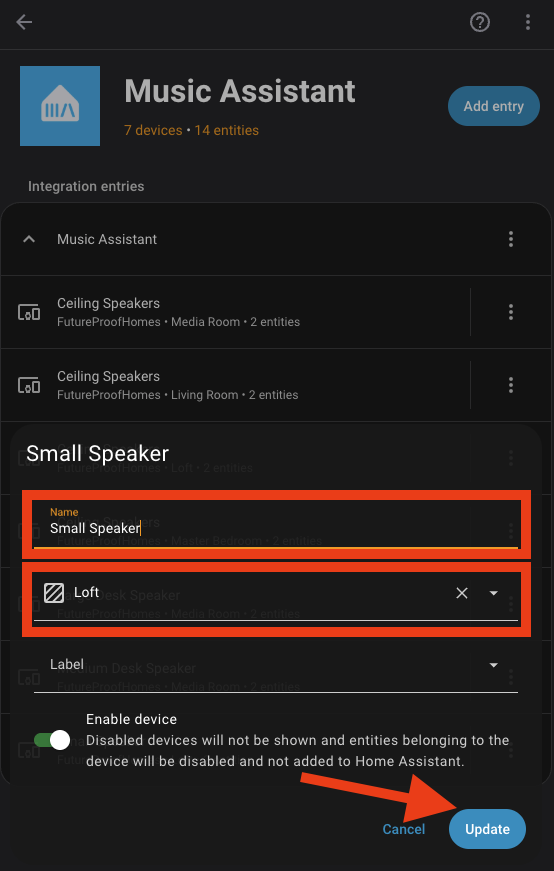
Give the device an intuitive name. Be sure to assign an area. Click Update. -
Entity Settings
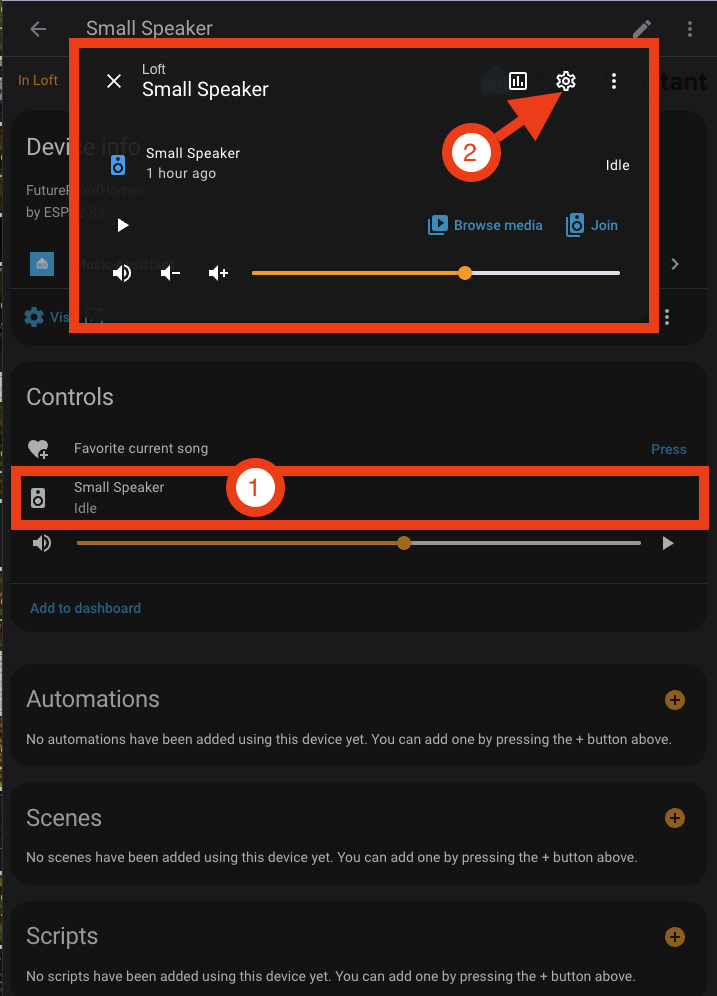
Click on the newly renamed device to see all its entities. Then click on the actual media player entity in the controls section. Click the settings icon.
icon. -
Expose Speaker to Assist
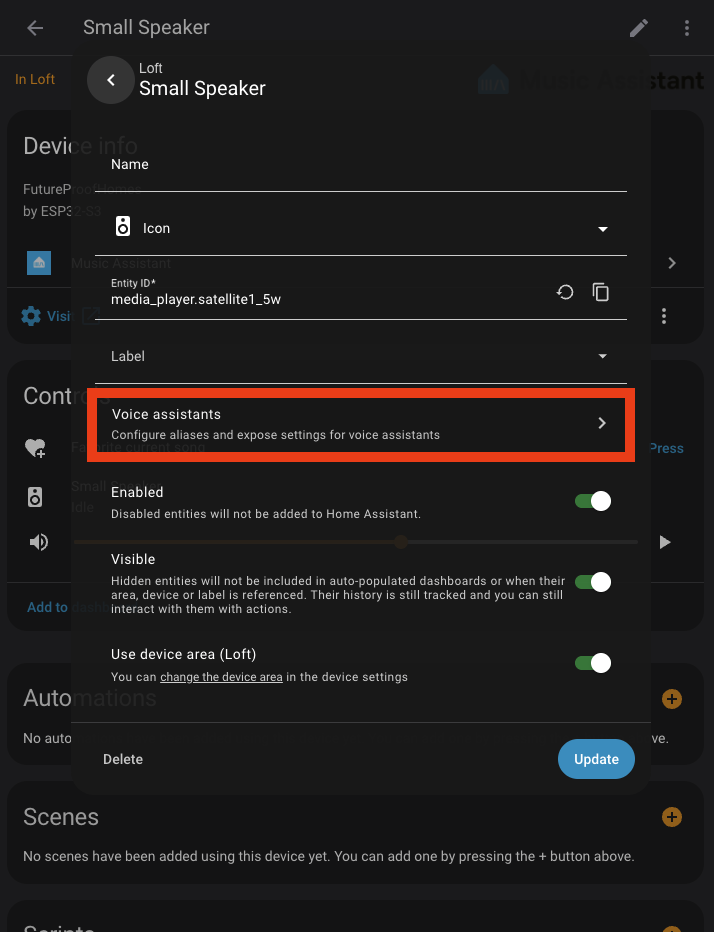
Click on "Voice assistants" and toggle on "Assist" to expose the Music Assistant speaker to your voice assistant.
My Results:
- Playing a song by artist or track name works fairly well.
- If you don't specify a speaker, it sometimes chooses the right one automatically; therefore it is best to explicitly specify which speaker you want to control.
- You can't control multiple speakers in an area (yet).
- You can't group or ungroup speaker groups (yet).